A leaning post or a few broken pickets doesn’t always mean you need a whole new fence. But sometimes repairs just delay the inevitable and cost more in the long run. Here’s how to tell the difference, especially for fences in Lewisville, Flower Mound, and the rest of North DFW.
Start With the Posts
Posts are the backbone of your fence. Pickets and rails are cheap and easy to replace, but if the posts are failing, everything attached to them will keep failing too.
Walk the fence line and push gently on each post. A post that moves, leans, or feels soft at the ground line is a problem. Wood posts usually rot right where they meet the soil, so check there first.
- One or two bad posts: usually a simple repair. The posts can be replaced, often with galvanized steel.
- Many bad posts: the rest are likely close behind. This is usually when replacement makes more sense.
Signs Your Fence Can Be Repaired
- Only a few posts are leaning or loose
- A handful of pickets are cracked, warped, or missing
- A gate sags or won’t latch, but the posts are solid
- Storm damage is limited to one or two sections
- The wood is weathered but still solid when you press on it
In these cases, a repair can add years to your fence for a fraction of the cost of replacing it. If the wood is gray but solid, cleaning and staining can make it look almost new.
Signs It’s Time to Replace
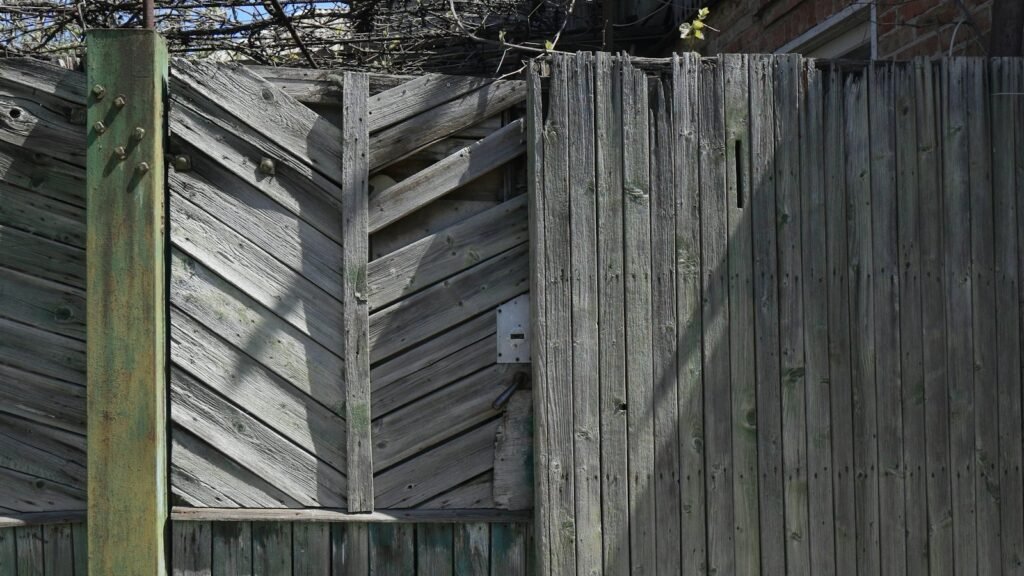
- Many posts are rotted, loose, or leaning
- Long stretches of fence are wavy or pulling apart
- Pickets are splitting and cracking along most of the fence
- You’ve repaired the same fence several times in the last few years
- The fence is 15 to 20 years old or more
- Your HOA has asked you to fix the fence’s appearance
Quick Guide: Repair or Replace?
| What you see | Usually means |
|---|---|
| One or two leaning posts | Repair |
| A few broken or missing pickets | Repair |
| A sagging or dragging gate | Repair |
| One section knocked down by wind | Repair |
| Many posts rotted at the ground | Replace |
| Long stretches leaning or wavy | Replace |
| Gray, cracked, splitting wood throughout | Replace (or stain if still solid) |
| Fence is 15+ years old with repeated repairs | Replace |
Why North Texas Fences Wear Out Faster
Clay soil
Much of North Texas sits on expansive clay. It swells when it rains and shrinks during dry spells, and that constant movement pushes posts out of line over time.
Sun and heat
Long, hot summers dry out wood, fade stain, and cause cracking. Unstained cedar turns gray quickly.
Spring storms
Strong winds hit privacy fences like a sail. Fences with weak or rotted posts are usually the first to go down.
If You Repair, Upgrade the Posts
If your fence needs new posts, ask about galvanized steel posts set in concrete. They don’t rot and they resist shifting soil better than wood. Many homeowners replace failing posts with steel and keep their existing pickets, which gives the fence a second life.
Storm Damage and Insurance
If a storm or a fallen tree damaged your fence, take photos before anything is removed and ask for a written estimate. Some homeowners policies cover this kind of damage. Check your policy to be sure.
Not Sure Which You Need?
A local fence pro can look at your posts, rails, and pickets and tell you honestly whether repair or replacement makes more sense, with a written price for either option.
Get a Free Fence Repair or Replacement Quote
Serving Lewisville, Flower Mound, Highland Village, and North DFW. Call or text (940) 331-6223, or fill out the form.
Related: Fence repair · Wood & cedar fences · Fence staining · Cedar vs. vinyl fences